
The American Market Ecology of Japanese Sake

Abstract
Gibson & Jeffery spent October 2025 in Japan engaging in outreach with the Japanese alcohol industry. In this article, Rik D. Jeffery, Esq. argues that continued growth in the US sake market will not happen through mass market distribution. Instead, it will be driven by targeted cultural integration supported by education, improved localization, and on-site consumption venues.
In October of 2025, I traveled to Japan for a month to do some business development with the sake industry. This was also an opportunity to reconnect with my own Japanese heritage and family – some of whom I had not seen in over 20 years. It was an amazing experience, professionally and personally.
When I started running my own alcoholic beverage law firm, I became counsel for a sake importer. Through this work I began to appreciate how truly vast and diverse the world of sake is. There is just as much complexity, variety, artistry, and history in Japanese sake as there is in wine, beer, or any other brewed alcoholic beverage. So why then, does the American market lack meaningful access to the vast variety of sake that Japan and much of Asia enjoys? My observations led me to believe that the answer to this question is that the market ecology needed to support successful globalization and American sake distribution is still maturing. Right now there are three major components of American sake market ecology that are major obstacles to sake producers, importers, and exporters.
- Distribution: While artisanal sake producers are interested in exporting, and American imports continue to grow, artisanal producers have trouble forming quality relationships with importers and distributors. There is often a mismatch in incentives between artisanal sake producers and the large American distributors that dominate mass market product outlets. Mass market outlets are not compatible with smaller batch artisanal sake producers.
- Localization: Sake producers are only just starting to understand that localizing their product is about more than regulatory compliance and translation. It’s about giving the sake a story that resonates with the brand’s target consumers. Figuring out the right targets and what story to tell inherently contains cross-cultural tension between maintaining the authenticity of the product while also telling its story in a way that people of a different culture can understand.
- Education: Infrastructure to give tastemakers – folks like chefs, bartenders, the clerks at your specialty bottle shops, alcohol industry influencers, and others – the education they need to credibly talk about sake to the same degree they can about wine, whisky, or cocktails is still in its infancy.
Accordingly, I think that continued growth in the US sake market will not happen through mass market distribution. Instead, it will be driven by targeted cultural integration supported by education, improved localization, and on-site consumption venues. I am breaking up this analysis into two parts: First a report on the current state of the market and the challenges that it is facing, and second, what the future of the market may look like and methods that the industry may use to combat the challenges in the American market.
Over the course of the month we spent in Japan we connected with the industry in a number of different ways:
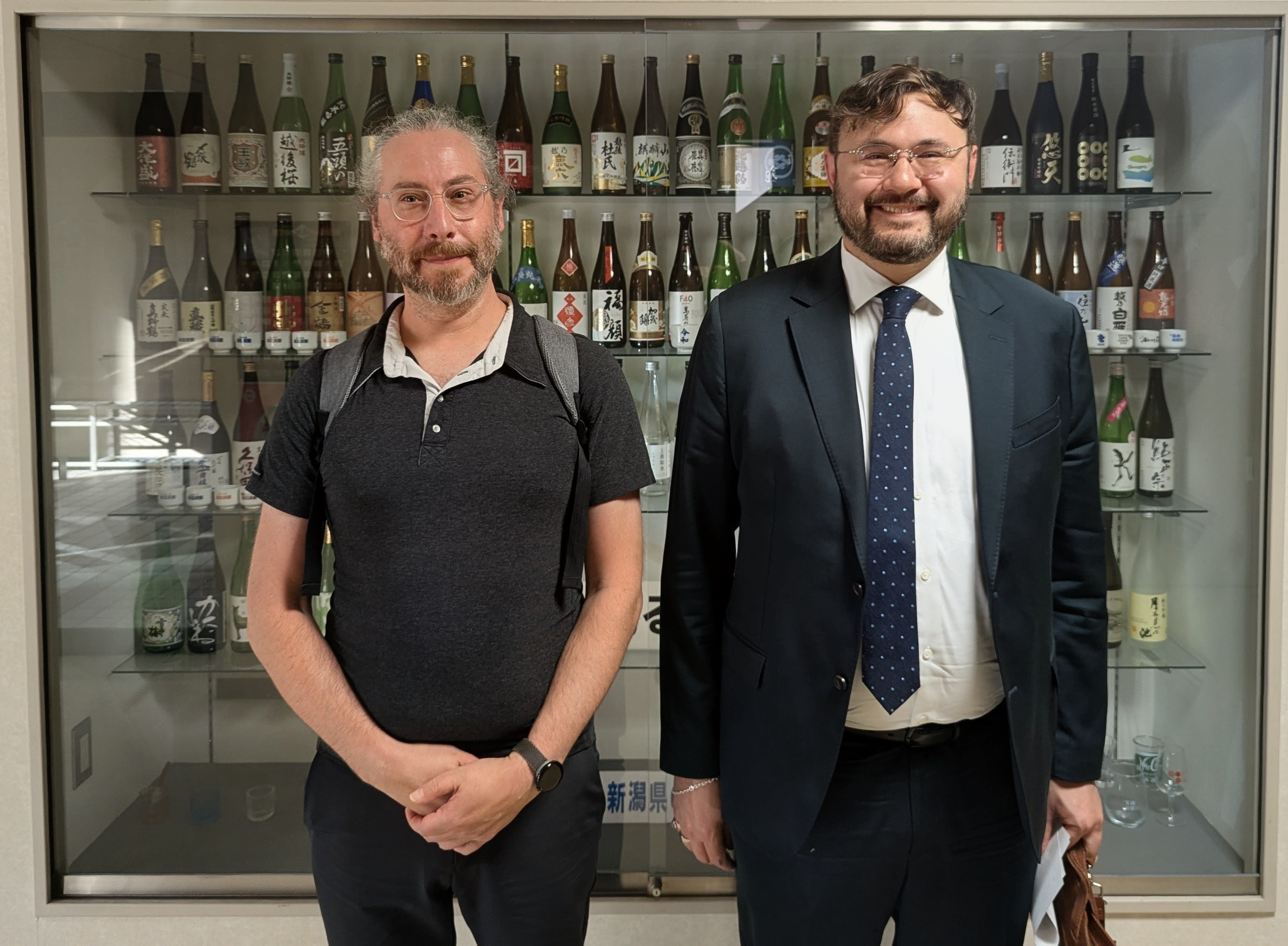
- We toured the Sakeology Center, Niigata University with Yasuyuki Kishi, Ph.D. (Director of the Sakeology Center, Niigata University) and Ikuhisa Nishida, Ph.D. (Associate Professor, Sakeology Center, Niigata University);
- We spoke with the Executive Director of the Niigata Sake Brewers Association, Koichi Sakai;¹
- We met with the Japan External Trade Organization’s (JETRO) Deputy Director and SSI International Sommelier of Sake, Anna Tsumura, and other members of the business development team, Taisuke Kayanuma, J.S.A. Sake Diploma, and Hiroyuki Imoto.
- We took an industry insider tour of the Shiokawa Brewery in Niigata with its President, Kazuhiro Shiokawa;
- We tasted lots of different styles of sake!
The Current State of the American Sake Market: A Distribution and Localization Story
While demand for alcoholic beverages in America has steadily decreased since 2021², demand for sake has increased. According to JETRO’s data, in the five years from 2021 to 2025, the value of Japanese sake exports to the United States grew by 15.2%³. While the US does account for a large portion of Japanese sake exports, if you were to wander into an average train station izakaya⁴ in Tokyo, you would find that they have a sake list to rival those of some of the finest restaurants serving sake in America. The sheer variety and number of quality sakes that are casually available is staggering⁵.
Given that the US market accounts for so much of Japan’s sake exports, the lack of variety in the American market seems counterintuitive. I discussed this discrepancy at length with JETRO officials, with Koichi Sakai Executive Director of the Niigata Sake Brewers Association, and with Yasuyuki Kishi, Ph.D. of the Sakeology Center, Niigata University. Their analyses mirrored many of my own.
During the first industry meeting of our trip, Mr. Sakai of the Niigata Sake Brewers Association explained to us that part of the reason that there is so much variety in the domestic Japanese sake market is that much of the sake is produced by small and medium-sized artisanal brewers⁶. While many of these breweries are interested in developing new markets for their products, they lack the business connections and capital to make American distribution a worthwhile investment. I think that the barriers here largely fall into two categories: a lack of marketing and localization resources, and ineffective distributor–producer relationships⁷.
Localization and Marketing:
Any American alcohol industry insider will tell you that the most determinative factor in an alcoholic beverage’s margin is the effectiveness of its marketing. Accordingly, marketing in America is extremely expensive and the cost is typically borne 50% by the distributor and 50% by the brand. A very rough estimate is that it costs about one million dollars a year in marketing expenses to launch a mass-market product per region and typically a company cannot expect to see returns on that investment for at least three years⁸. In Japan, sake producers often rely entirely on their retailers to market their products and do not have anything close to the sort of marketing budget that is the norm in the US. Sticker shock like this often scares producers away from American markets, especially when you consider that right now the yen has about 50% less buying power than the US dollar.
The truth is that what artisanal sake needs is not mass-market distribution but increased market penetration. The goal at this stage shouldn’t be to have artisanal sake sold in every supermarket and convenience store, in part because no one goes to those places for artisanal products, but also because no artisanal producer can produce the necessary volume⁹. Instead, the focus should be on having a wide variety of sake sold at specialty bottle shops, restaurants, bars, and other on-site consumption venues that are going to allow the public to fall in love with sake outside of the sole context of Japanese food.
Effective marketing for this purpose does not need to be massively expensive. Instead, it must be precisely targeted and well localized. While I was in Japan, I explained this concept using what I call the “Parable of Fernet” in San Francisco. I often brought a mini-sized bottle of Fernet as an omiyage (a traveler’s souvenir) for whomever I was meeting with to accompany the tale. (Feel free to skip the parable. It’s fun, but the takeaways are bulleted below).
The Parable of Fernet
Fernet is an extremely popular drink in San Francisco, where I live. There is no other beverage that I have encountered that manages to be quite so bitter, sweet, herbal, and minty all at the same time. Fernet is an acquired taste if ever there was one. Nonetheless, in San Francisco and in many other American cities, Fernet is often referred to as the “Bartender’s Handshake,” meaning that if you become a regular at a bar and the staff likes you, the bartender will often offer you a free shot of Fernet.
This practice not only drives sales of Fernet to bars and restaurants, but it supports direct to consumer sales as well. Back in the early 2000s when the US alcohol industry was undergoing its craft cocktail revolution, Fernet targeted its marketing at bartenders, industry insiders, and other tastemakers rather than directly at consumers. Plenty of free samples provided lots of opportunity for those people to acquire a taste for Fernet. In many ways because its flavor profile is so pungent, being able to enjoy Fernet was seen as a mark of sophistication (or proof that you had been properly hazed).
When the practice of offering a shot of Fernet to favored customers became standard in many bars, the true value of the targeted marketing became clear. Whether they knew it or not, by handing out those shots to favored customers, trusted bartenders were using the Fernet to say, “I like you and you are part of the community here”. It is hard to imagine a more positive association that a consumer could have with a product or a better reason for a consumer to pick up a bottle the next time they are at the corner store. The most brilliant part of this is that Fernet didn’t need to pay an army of bartenders to sell their product. Instead, they gave these tastemakers the opportunity to enjoy the product and left it to them to share that experience with the consumers and that part of the marketing was free.
So what can the Japanese Sake industry learn from Fernet’s Parable?
- Fernet is a foreign product that on its own might have been challenging for an American palate. If they could do it, so can sake!
- Fernet made sure that their bottle was properly localized. This means that in addition to complying with all the rules, the bottle told the story of an Italian amaro in English with trade dress that elevated the perception of the beverage’s sophistication.
- Instead of wasting time and money on direct-to-consumer marketing, Fernet targeted the sector of the industry that had the most contact with, and knowledge of, the end consumer: bartenders. By doing so they were able to access that contact and knowledge in a way that was much more effective than direct to consumer marketing.
While simple in concept, applying the above three points to sake, will present its own unique challenges.
- What are the right channels to reach businesses that may want to sell sake? I don’t think that sake is as challenging for an American palate as Fernet. That said, past improper storage and serving practices have led to negative perceptions. It will take time for opinions to change. I think identifying the appropriate tastemakers to educate consumers about sake and specifically the best ways to store and serve it is going to be the most effective answer to these negative perceptions.
- Who are the desired end consumers for sake? Figuring that out is going to determine which businesses and tastemakers to educate about your product. There are a lot of culinary uses for sake that just don’t exist for Fernet. Sake can be used like wine or beer in cooking and pairs beautifully with so many cuisines. For instance, pairing a wine with spicy BBQ can be challenging, but you will find that cold and crisp sake will clean and refresh the palate beautifully.
- How do we contextualize the story of sake in an authentic way that is also understandable to the American consumer? On a basic level, this means that the bottle needs to communicate effectively in English and the bottle’s artwork needs images that can act as cross-cultural touchstones for the liquid’s story. Kanji calligraphy is not going to be effective here.
There are American distributors and marketers that can help a sake brand with all these questions, but it’s important to remember that advice from professionals like that can be very expensive. For a foreign business, it can be very challenging to know if that advice is coming from the right place.
I gleaned from our meeting with Mr. Sakai that there have been a lot of efforts on direct-to-consumer marketing. Global sake festivals are a good example of this type of marketing. People attending these festivals sample lots of different kinds of sake they might not have otherwise and enjoy themselves. This demonstrates that there is demand for sake in the beverage market¹⁰. But if there is not enough “market ecology” to support these efforts – if sake is not being sold in stores or poured in bars and restaurants – then there is no way for consumers to establish a consistent purchasing habit with the beverage. Moreover, a sake recommendation is going to mean more to a consumer when it comes from a trusted bartender, salesperson, or restaurant.
My biggest piece of advice for a Japanese sake producer that wants to sell in the United States is to take a trip to your favorite major city and take some time getting to know the people working at the businesses where you want to sell your sake. Take a look at what American bottles look like and experience how alcohol is served. Even if you don’t end up with a new account, you will walk away with a better sense of who you need to talk to for advice and a better idea of what you can do on your own to tell the story of sake.
Producer Distributor Relationships:
In Japan, sake is sold directly to retailers. In America, by law, alcohol producers can only sell to retailers through third party importers and distributors. America is dominated by a small handful of mass-market distributors. There are also smaller specialty distributors. Finding a distributor that is going to take the time to learn about your product and be a true partner in its marketing is challenging for any business, but it may be especially difficult for a Japanese sake producer that does not understand the English language, or American business customs. Mr. Sakai was the first on our trip to enumerate three different themes on failed distributor relationships that cropped up repeatedly in just about every discussion we had.
- Because the American alcoholic beverage market is dominated by a small handful of large distributors with vast economic power, artisanal sake producers often find that the discrepancy in negotiation leverage leads to one-sided, unprofitable business arrangements.
- Artisanal producers cannot provide enough volume of product to make their account worthwhile to the big American distributor. As a result, often the account gets assigned to salespeople who may not be motivated to learn about the sake they are selling. It becomes only one product on a long list of smaller brands they are responsible for. Moreover, your typical salesperson at a large distributor is going to have a lot more knowledge of products in English with American or European roots. So, selling sake well requires additional effort on the part of the salesperson. Given the relatively small volumes involved, the payoff may just not be worth it.
- Instead of attempting to negotiate directly with one of the major American distributors directly, many breweries have tried to break into the American markets by having one of the major Japanese food-industry trading companies (companies like JFC International, Mutual Trading, or Wismettac) represent them. However, this does not address the artisanal producer’s volume and marketing issues, and at the end of the day just adds an additional middleman that is going to take a cut of the revenues.
- While any of the major Japanese food-industry trading companies have the economic clout to avoid being written off entirely by an American distributor, they have no particular expertise in selling alcohol in an American market. Moreover, unless the trading company has a sizable portfolio of sake with a cooperative marketing plan, the individual sake producer is going to run into the same volume vs effort issue that they would have encountered had they gone directly to the big distributor.
- While there are sake-specific distributors in the United States, many of these distributors have a limited market, often working only with Japanese restaurants or Japanese grocers, and thus far it appears that their efforts to develop market demand for sake beyond these diaspora-specific businesses have been limited.
- I suspect that part of this lack of deeper market penetration may come from the fact that aside from basic regulatory compliance, smaller, sake-specific distributors do not have the resources to ensure that all the brands they carry are properly localized for the American consumer. Therefore, such distributors get the biggest return on their sales efforts by focusing on diaspora consumers to whom the localization of the product is not going to matter as much.
Notwithstanding the above three issues, there is a small subset of sake distributors/importers that appear to be serving sake producers well, companies like Kome Collective, Fifth Taste, Sake One, and Skurnik Wines. These companies have a specialized model, customer base, and tool set, that make them crucial in supporting the ecology of the American sake market.
Companies like Kome Collective, Fifth Taste, Sake One, and Skurnik Wines all have deep connections and expertise in Japanese sake. However, their American customers tend to be restaurants, bars, and specialty bottle shops, and not only the diaspora-specific ones. They tend to have extensive hand-selected sake catalogues and often sake is all that they distribute. The sake-specific catalogues mean that these companies’ salespeople are incentivized to get some sake education. Moreover, an importer/distributor that specializes in the aforementioned outlets is going to have experience increasing the sake’s market penetration by selling outside of Japanese businesses.
The Future of the American Sake Market:An Education Story
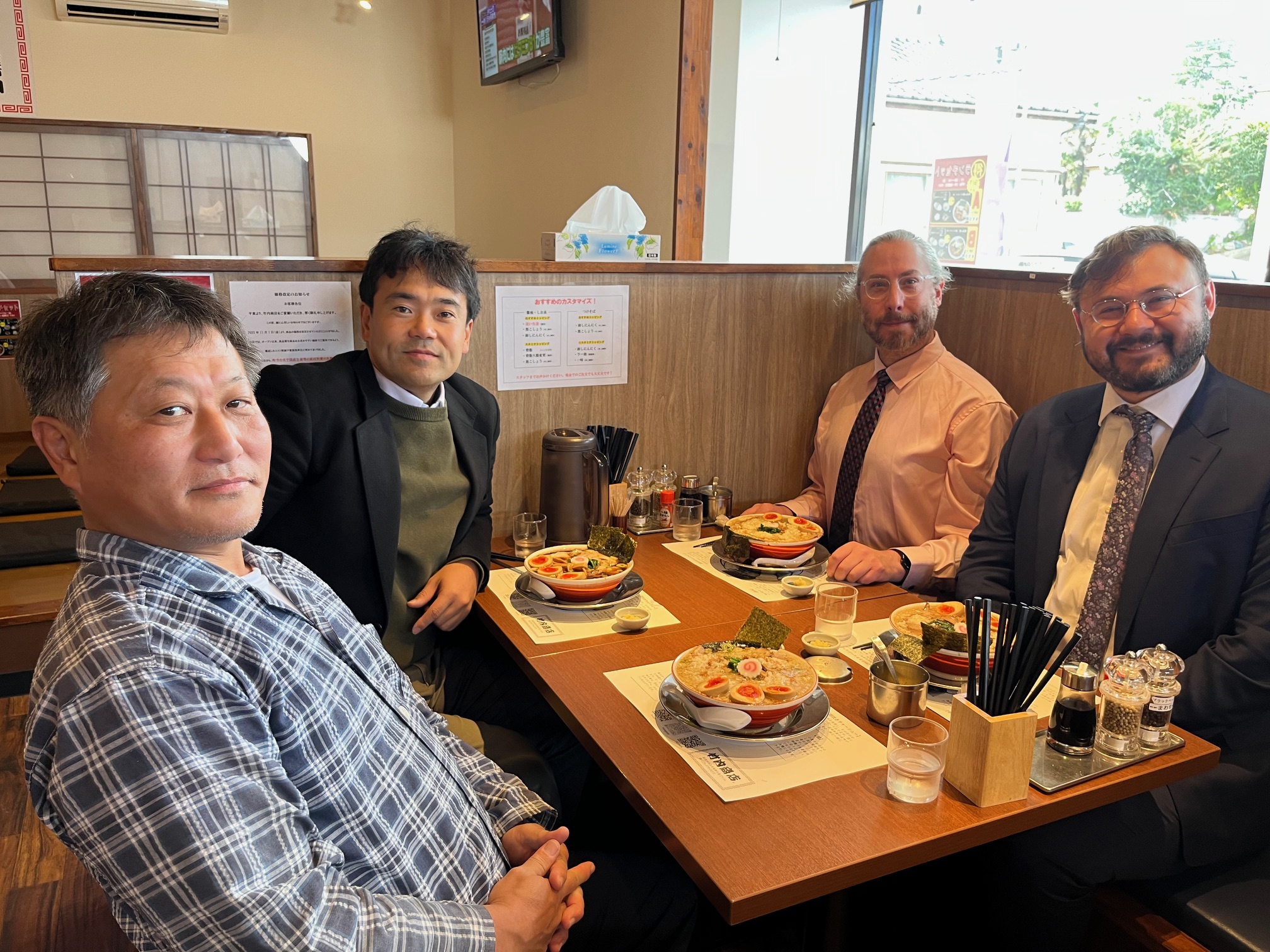
The challenges facing artisanal sake producers in the American marketplace cannot be underestimated. However, I think that the future of sake in the American market is a bright one because while I was in Japan I got to see how industry leaders are taking on the ecological challenges of localization, education, and distribution. There were three major experiences that demonstrated this to me: our meeting with JETRO, touring the Sakeology Center, Niigata University, and my site visit of the Shiokawa Brewery. The latter two were guided by Mr. Kazuhiro Shiokawa, the President of the brewery and we were accompanied by Yasuyuki Kishi, Ph.D. the Director of the Sakeology Center. I can’t overstate Shiokawa-sensei and Kishi-sensei’s hospitality and kindness. They fed us some fantastic Niigata-style ramen and spent the entire day revealing to us the potential of sake.
I think a good place to start is the meeting I had with the Japanese External Trade Organization (JETRO). JETRO is an independent trade organization with backing from the Japanese government. They provide support services for just about every industry that exports products from Japan. JETRO has offices in just about every major metropolitan area around the world. Broadly speaking, they support Japanese exporters with business skills at home as well as connecting Japanese exporters with foreign importers. Abroad, they play a major role in creating demand for Japanese products with the goal of promoting Japan itself as a brand. As you might imagine, JETRO is very involved in promoting and facilitating sake exports.
At JETRO’s Tokyo headquarters, I met with JETRO’s Deputy Director of the Business Development Division, who is an SSI International Sommelier of Sake, along with two of her staff. We talked through sake export statistics and some of the difficulties that artisanal sake brewers were having establishing relationships with American distributors. As the conversation progressed, French wine came up as a natural comparison to sake. It became clear to me that some of the officials thought that Japanese sake was somehow playing catch-up with French wine. On its face, I thought that this was an odd sentiment. Sake making has been a fully realized tradition and craft in Japan at least as long (if not longer) as wine has been endemic to France.
It turns out that what the JETRO officials were referring to was the way that the French have globalized the love and stature of French wine and French culture through sommelier training programs¹¹. As a lover of fine food and wine, I had always thought of a sommelier as a helpful, trusted expert to have at a restaurant – like a good bartender but for wine. But when you step back and look at sommeliers from the perspective of the French people, government, and economy, they take on a much different character:
- People from all over the world travel to France to study French winemaking and French wine pairing and pay the French to get degrees and certificates in those fields.
- Those people then go back to their home countries, where they work in hospitality and the local wine industry, where they then get paid by those local businesses to teach people how to enjoy food and wine in the French style.
- In turn, that causes businesses around the world to start importing French wine and other French culinary products.
- It also embeds individuals with social and educational ties back to France in just about every major culinary center in the world, which means that the French learn from each of those culinary centers in return.
I trust and love sommeliers, but the lawyer in me sees that this is actually a brilliant scheme to support France’s economy and culture. Arguably, the sommelier system is what happens when the Parable of Fernet is implemented for a national industry with government backing.
I think the JETRO officials were correct. Japan is behind when it comes to setting up its own global network of sake experts. But I don’t think that is much cause for concern. Everyone else is behind the French too. Moreover, the foundation for a global network of sake experts is already here. There are already sake sommelier training programs, and many wine sommelier training programs feature units on sake. I got to see how Japan’s global network of sake experts was being established firsthand when I toured Niigata University’s Sakeology Center with its Director, Yasuyuki Kishi, Ph.D. and Shiokawa-sensei.
The Sakeology Center at Niigata University was founded in 2018 as a first-of-its-kind interdisciplinary institute dedicated to the study of sake. Its mission is to:
“…Foster international human resources who have a broad perspective that goes beyond conventional brewing and fermentation studies, and who can acquire knowledge and education about sake, a traditional Japanese culture, by learning about it from various perspectives, and who can disseminate them both domestically and internationally.”¹²
Accordingly, in addition to a wide variety of online lectures and resources, the department also offers master’s and PhD programs as well as certifications for sake industry professionals. The institute also partners with notable viticulture programs such as the Institute of Vine and Wine Science at the University of Bordeaux and the Department of Viticulture and Enology at UC Davis.

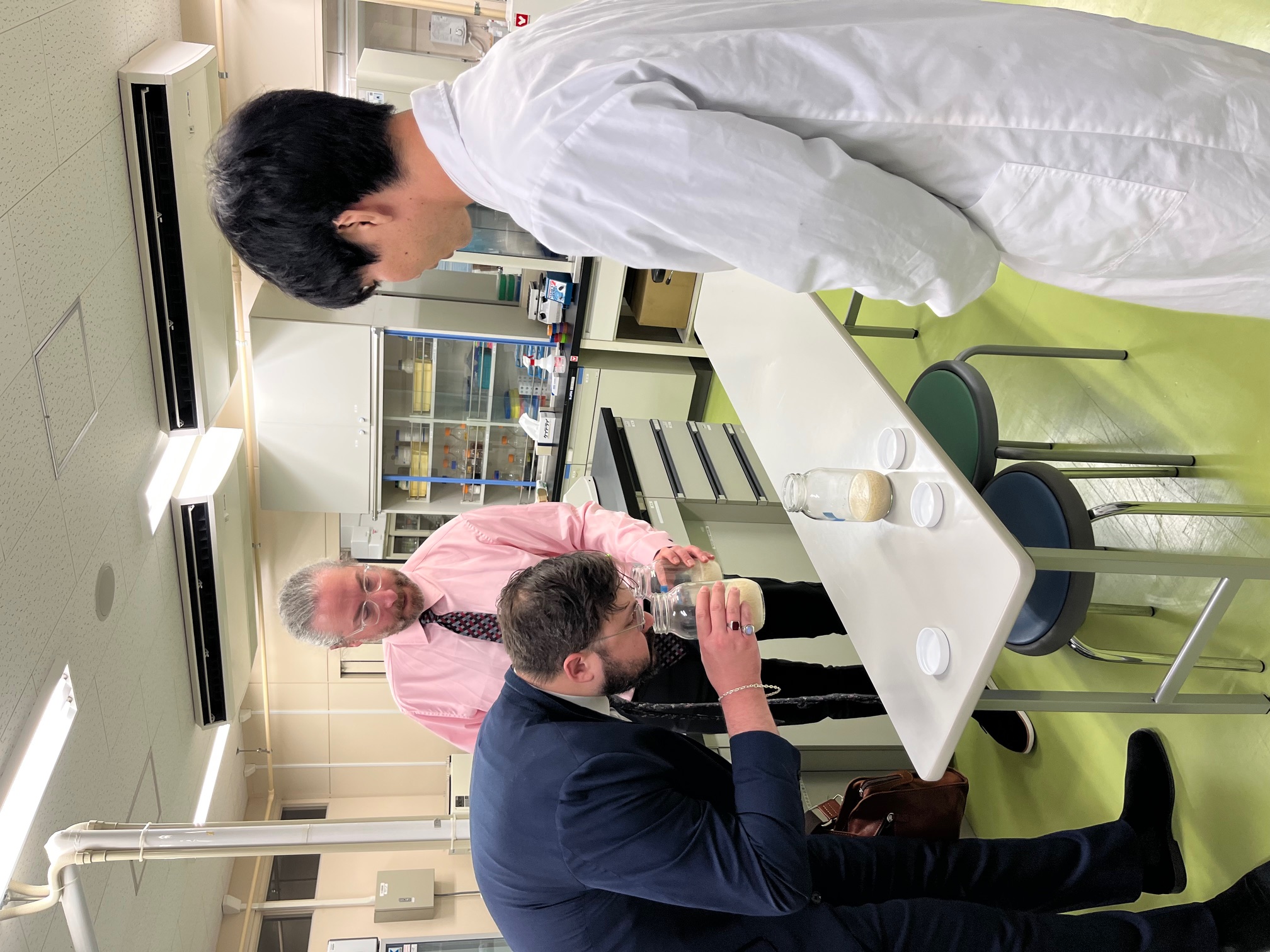
Unlike many sommelier training programs that I have seen, what struck me about the Sakeology Center was how truly interdisciplinary it was. On campus, Nishida-sensei and Kishi-sensei led us on a tour of the “Sake Test-Brewing” and “Sake and Food Taste Analysis” Labs that study how different strains of yeast affect the flavors and aromas during the process of rice fermentation by koji¹³ and yeast. The yeast labs were also compiling libraries of yeast strains for basic science and the industry, and running chemical analyses on test-brewed sake at the Lab and sake produced by brewers mainly in Niigata.
Beyond that, Kishi-sensei explained to me that part of that mission of the department is to not only support sake makers with cutting-edge science but to also train professionals that are grounded in sake’s history, culture, and economics. To that end, the institute has an amazing collection of historical texts on sake making, and its scholars have backgrounds from across the humanities as well as the hard sciences. Kishi-sensei explained that the institute features scholars with diverse academic backgrounds such as law, business, sociology, and public health. I think taking this interdisciplinary approach from the start will create a diverse and versatile sake professional network that will seed sake businesses and economies all over the world. I think that programs like this will eventually supercharge the global reach of sake.
Case Study: Shiokawa Brewery, a Successful Artisanal Sake Exporter
There are Japanese businesses that have already had success selling their products in America. While sampling many of their fantastic products, we learned that even though they are an artisanal brewery, Shiokawa Brewery exports over 50% of the products they make, with a significant portion of that volume destined to the United States. This is a huge accomplishment for an artisanal brewery. I suspect its successes are in part because Shiokawa-sensei learned many of the lessons in The Parable of Fernet before I was ever around to tell it. On a trip to San Francisco about fifteen years ago, he met Beau Timken, the owner of True Sake. On a return visit a few years later, he met Yoshihiro Sako, then a restaurant sommelier in the Bay Area, and now the owner of Den Sake Brewery. Those encounters clearly left a mark, because Shiokawa’s exported products today are expertly localized and reflect the time he spent getting to know the people who make and sell sake in America.
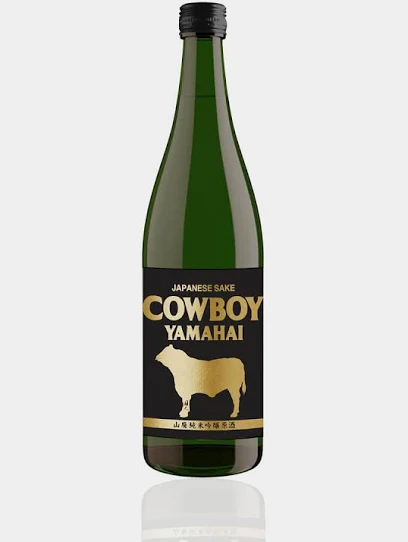
For instance, take a look at Shiokawa’s Cowboy Yamahai Sake. Note that the label is not covered in calligraphy but instead uses images that are Western cultural touchstones. Shiokawa-sensei wanted to make a sake that paired well with American steak¹⁴, he related personally to the pioneering archetype of the cowboy, and it was Beau Timken who took those two inspirations and gave the sake its name. The trade dress here tells a story that the American consumer can understand and contextualizes the beverage outside of traditional Japanese cuisine. At the same time, make no mistake, Cowboy Yamahai Sake is still a traditional Japanese product from a brewery that has been around for over 100 years, using water and kimoto-style brewing techniques that are unique and quintessential to Niigata, Japan.
You can see a similar attention to localization with each of Shiokawa’s exported products. I suspect that a lot of this comes from the fact that while he was in the Bay Area, Shiokawa-sensei took the time to get to know some of the businesses that he wanted to carry his products and spent time enjoying American drinking culture. Shiokawa-sensei confessed that fond memories of excellent meals at San Francisco’s NoPa restaurant inspired the のぱ (phonetically “no-pa”) sake that he exports. Shiokawa-sensei also worked early on with True Sake, the first and one of the only sake specialty bottle shops in America, which still carries his products.
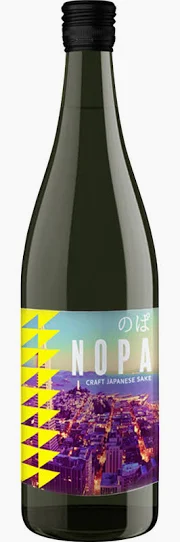
Shiokawa-sensei’s success also comes from his distributor relationship. Shiokawa-sensei recounted how, when starting out he struggled to find an American distributor relationship that made exporting his products worthwhile. To that end, I think that it is notable that Shiokawa Brewery’s products are not imported by one of the big American distributors, or by one of the smaller “sake only” distributors. They found a middle ground in the Kome Collective, which, before it spun off its sake portfolio, was part of a well-known wine importer.
The Kome Collective’s expertise and ties to Japan’s sake industry are strong, deep, and critical to their success. But I also think that its origins in wine are important to note because of the type of businesses that were likely the Kome Collective’s customers: high-end restaurants and bars, and specialty bottle shops. These were the types of businesses that Shiokawa-sensei frequented when he came to San Francisco, and the types of businesses that I can see having a lot of success selling artisanal Japanese sake.
Shiokawa is only one example of an artisanal brewery that has figured out a successful American export model. I am sure that there are others with different successful models. But I suspect that before the American market can truly support an explosion of artisanal sake the before mentioned components education, localization, and distribution must continue to mature.
So What About the Law?
I am aware that taking a month to travel to a different country and study an industry is not something that many lawyers do. Why spend so much time neither vacationing nor generating billable hours?
Practicing law is going to change dramatically within the next two years and I think that my clients are going to want a lawyer who is prepared. I think that we are maybe a year or two away from AI tools that can generate reliable and comprehensive analyses of just about any area of law that you can think of. I think that those tools will also generate at least a first draft of just about any legal document that you might need. So, what then is there left for those of us humans dedicated to toiling in the fields of the law? For me, the answer is strategic advice driven by contextual analyses.
When every lawyer has a comprehensive analysis of any area of the law at their fingertips, what will make the difference between attorneys is truly knowing an industry inside and out. Moreover, that knowledge will need to be more about people and the lived experiences that motivate their business choices. Using what we have discussed in this article as an example. It is going to be the lawyer that knows the human nuances that will get and keep clients:
- I can provide guidance on why and how big American distributors are likely to treat an artisanal Japanese sake producer and I can point clients towards parties that I think would be good partners.
- I can now help guide clients towards American partners that will place their product in the appropriate marketplace.
- I can help clients think about the type of external support their product needs to find success in the American market.
- I can help clients navigate the tension between authenticity and cross-cultural messaging in their marketing and agreements.
What most of the above points boil down to is asking the right questions and learning how to understand the answers from the perspectives of both Japanese and American culture. While many lawyers can ask pertinent questions. It is almost impossible to ask the right questions unless you have gone and met the people, experienced the culture, and listened to the stories. This is not something many lawyers are equipped to handle and not something that AI will ever be able to do. I want my clients and prospective clients to know that this is something that I am actually equipped to do.
As you might imagine then, our trip to Japan wasn’t to learn about sake laws. It was to meet and learn about sake people and their key challenges so that, because I have the right contexts, I will be able to offer solutions to those challenges through legal frameworks in a way AI simply cannot. A month in Japan was not nearly long enough. But it was an amazing start to a journey.
乾杯!!! (Kanpai)
